
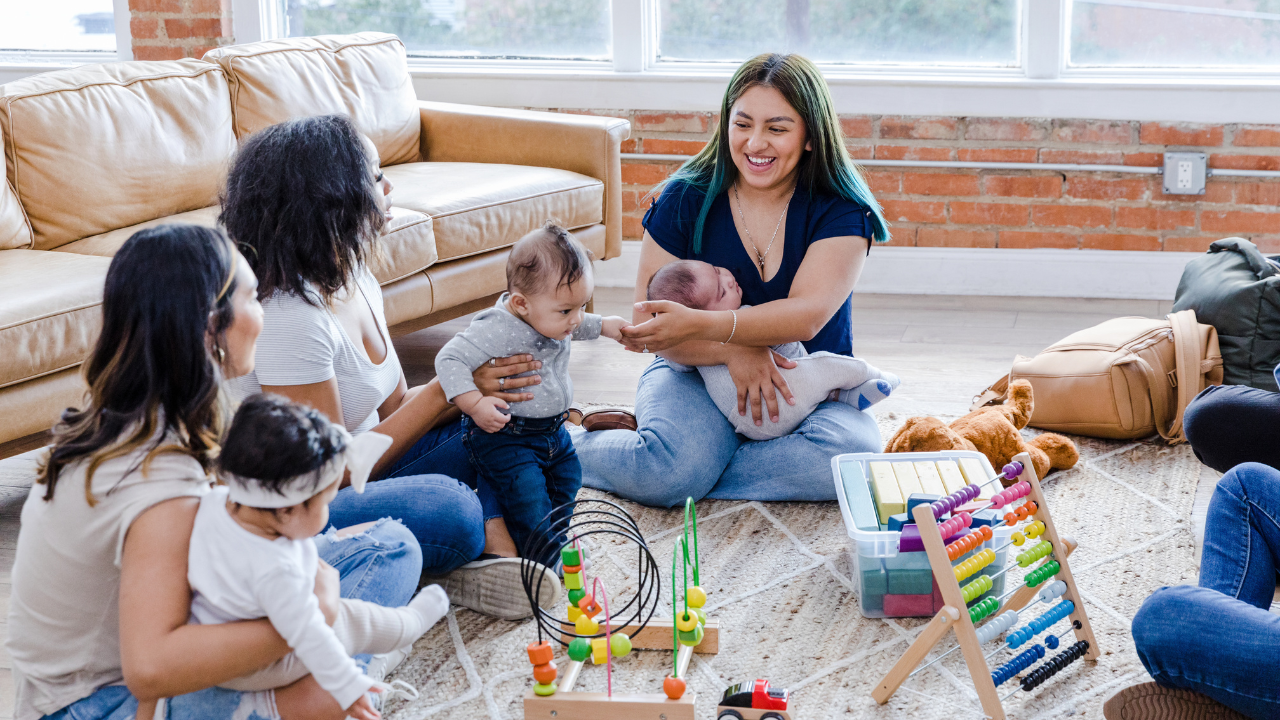
Everywhere you look this time of year, there’s glitter, wrapping paper, and picture-perfect families smiling under twinkling lights. The holidays promise joy, but for many new moms, they bring something else: exhaustion, pressure, and quiet loneliness.
You may be juggling feedings, healing from birth, managing expectations, and wondering how to “enjoy the holidays” when you barely have the energy to shower. And while everyone’s rushing to buy gifts, what most new moms truly need can’t be found in a store.
What you need, what all new moms deserve, is support. Not more stuff, but more care. More community. More connection.
In Nepal, where I grew up, postpartum moms are surrounded by love, rituals, and rest. Here in the U.S., many moms face the exact opposite isolation wrapped in glitter and good intentions. Let’s explore why community is the greatest gift you can give or receive this holiday season.
The Cultural Contrast: Rest vs. Rush
In Nepal, when a woman gives birth, she enters a period called “Sutkeri Basne.” For 30 to 40 days, she’s encouraged to rest, recover, and be nurtured. Family members cook her meals, massage her body with oils, help with the baby, and protect her from stress. The focus isn’t on doing, it’s on healing.
There are no “thank you” cards or fancy baby gifts, just time, touch, and presence.
In contrast, many new moms in the United States are sent home within 48 hours of giving birth, expected to resume daily life almost immediately. Add holiday pressure dinners, visitors, decorations, “perfect family photos,” and it’s no wonder so many mothers feel like they’re falling apart behind festive smiles.
In cultures where postpartum care is community-driven, moms heal faster, not because they have more, but because they’re surrounded by enough. Enough hands. Enough listening. Enough love.
Why Emotional Support Beats Any Holiday Gift
When you’re recovering from pregnancy and birth, what you truly crave isn’t a scented candle or matching pajamas; it’s understanding. It’s someone saying, “Rest, Mama. I’ve got the dishes.”
Here’s why emotional and social support matter most:
-
Support Regulates Stress.
Being seen and heard lowers cortisol, the stress hormone that spikes during postpartum. Studies show that social support reduces postpartum depression symptoms and speeds up emotional recovery. -
Connection Heals Isolation.
During the holidays, loneliness can intensify. Having even one person, such as a friend, partner, or postpartum support professional, who checks in regularly makes a world of difference. -
Community Creates Confidence.
Being surrounded by other moms, whether virtually or locally, normalizes the ups and downs of motherhood. It reminds you that you’re not “failing,” you’re healing.
Research Insight: A Journal of Maternal Mental Health study found that moms who participated in postpartum community programs reported 50% fewer depressive symptoms than those without social connections.
👉 Mom-to-Mom Truth: A community that listens is more powerful than any gift that sparkles.
How to Build a Holiday Support System
You don’t need a big circle, just a few people who make you feel safe, seen, and supported. Here’s how to start:
1. Say What You Need (Without Guilt)
It’s okay to ask for help. Tell family or friends exactly what would make the holidays easier:
- “Can you bring food instead of gifts?”
- “Can you hold the baby while I shower?”
- “Can we skip the party this year?”
Boundaries are not selfish; they’re a form of postpartum care.
2. Join a Postpartum Community
Isolation is one of the leading causes of postpartum depression in new moms. Whether in person or online, join spaces where moms talk honestly about the messy parts of healing.
Try:
- Local or virtual postpartum support groups near me
- Peer circles through Momkinz postpartum support
- Connecting with other new moms in your neighborhood
3. Lean on Postpartum Support Professionals
You don’t have to do it all. Doulas, therapists, lactation consultants, and postpartum coaches exist for this exact reason. They’re trained to help moms manage anxiety, exhaustion, and the emotional rollercoaster of motherhood. If you’re struggling with sleep, sadness, or constant worry, reach out to a postpartum care provider for evaluation and resources.
4. Redefine Holiday Traditions
Who says holidays have to look a certain way?
- Light one candle and give thanks for rest.
- Order takeout instead of cooking a feast.
- Ask loved ones to bring over comforting meals or help with laundry instead of exchanging presents.
Traditions evolve, especially when they protect your peace.
The Research Reality: Moms Are Struggling, Not Spoiled
In the U.S., maternal mental health is in crisis:
- Over 75% of moms report feeling isolated or unsupported after birth.
- 40% experience depressive or anxious symptoms but never receive help.
- Suicide is now one of the leading causes of death for postpartum women.
And yet, so many moms hesitate to ask for help, especially during the holidays, when everyone expects smiles and sparkle. You’re not being dramatic. You’re being human. Healing after birth requires care, not comparison.
How to Give (and Receive) the Gift of Support
For Friends and Family:
-
- Offer practical help, meals, errands, and childcare.
- Don’t ask, “Do you need help?” Say, “I’m bringing dinner Thursday.”
- Listen more, advise less.
For Moms:
-
- Accept help without guilt.
- Prioritize rest over perfection.
- Replace holiday pressure with presence.
For Everyone:
-
- Normalize asking for help.
- Talk openly about postpartum depression and anxiety.
- Support local and online communities like Momkinz postpartum support.
This Holiday, Choose Connection Over Perfection
Mama, you don’t need another gift bag, photo filter, or shiny bow. You need hands that help, hearts that listen, and spaces that remind you you are not alone.
This season, may your greatest gift be community, one that understands that motherhood is not about doing it all but about having others who help carry the load.
At Momkinz, we believe in rebuilding the village every mom deserves. Through our platform, you can connect with trusted postpartum care providers, support professionals, and postpartum support groups near you who will walk with you through the holidays and beyond.
Visit Momkinz postpartum support today because the best gift for a new mom isn’t wrapped; it’s felt.

FAQs About Holiday Support Systems and Postpartum Care
1. Why do new moms feel more emotional during the holidays?
After pregnancy and birth, your hormones are shifting, sleep is limited, and expectations are high. The holiday season often magnifies loneliness and fatigue, especially if you’re healing from postpartum depression or anxiety.
2. How common is postpartum depression in the U.S.?
According to the CDC, about 1 in 7 mothers experience postpartum depression, and up to 20% experience postpartum anxiety. Many moms struggle silently, especially during high-pressure times like the holidays.
3. What makes emotional support more important than gifts for new moms?
Gifts fade, but support lasts. Emotional care, listening, helping with chores, and cooking meals strengthen a mom’s mental health and speed up postpartum recovery.
4. How does community help prevent postpartum depression?
Research shows that moms with strong emotional and social support networks are 50% less likely to develop postpartum depression symptoms. Community creates connection, which is the foundation of healing.
5. What can friends and family do to support a new mom during the holidays?
Offer practical help like meals, laundry, or babysitting. Don’t ask, “Do you need help?” Instead, say, “I’ll be by on Thursday with dinner.” Presence matters more than presents.
6. What cultural traditions in Nepal support postpartum moms?
In Nepal, new moms observe “Sutkeri Basne,” a 30–40 day period of rest, healing, and care from family. It’s a sacred time where the community prioritizes the mother’s recovery, a beautiful reminder of how postpartum should feel everywhere.
7. Why do many moms feel isolated in the U.S. after giving birth?
Unlike in many cultures, U.S. moms often lack structured postpartum support systems. They’re expected to return to work or “bounce back” quickly, leaving them without time or help to heal properly.
8. How can I find postpartum support groups near me?
You can search for postpartum support groups near me through local hospitals, community centers, or platforms like Momkinz postpartum support, which connects moms to verified postpartum care providers and support professionals.
9. What are some signs I might need extra postpartum support?
If you’re feeling persistently sad, anxious, or disconnected, or if everyday tasks feel overwhelming, it’s time to reach out to a postpartum care provider or therapist. You deserve help and rest, not guilt.
10. How can Momkinz help during the holidays?
Momkinz postpartum support connects moms with trusted postpartum professionals, support groups, and care providers near you. Whether you need emotional guidance, local resources, or a listening community, Momkinz helps you find your village.