
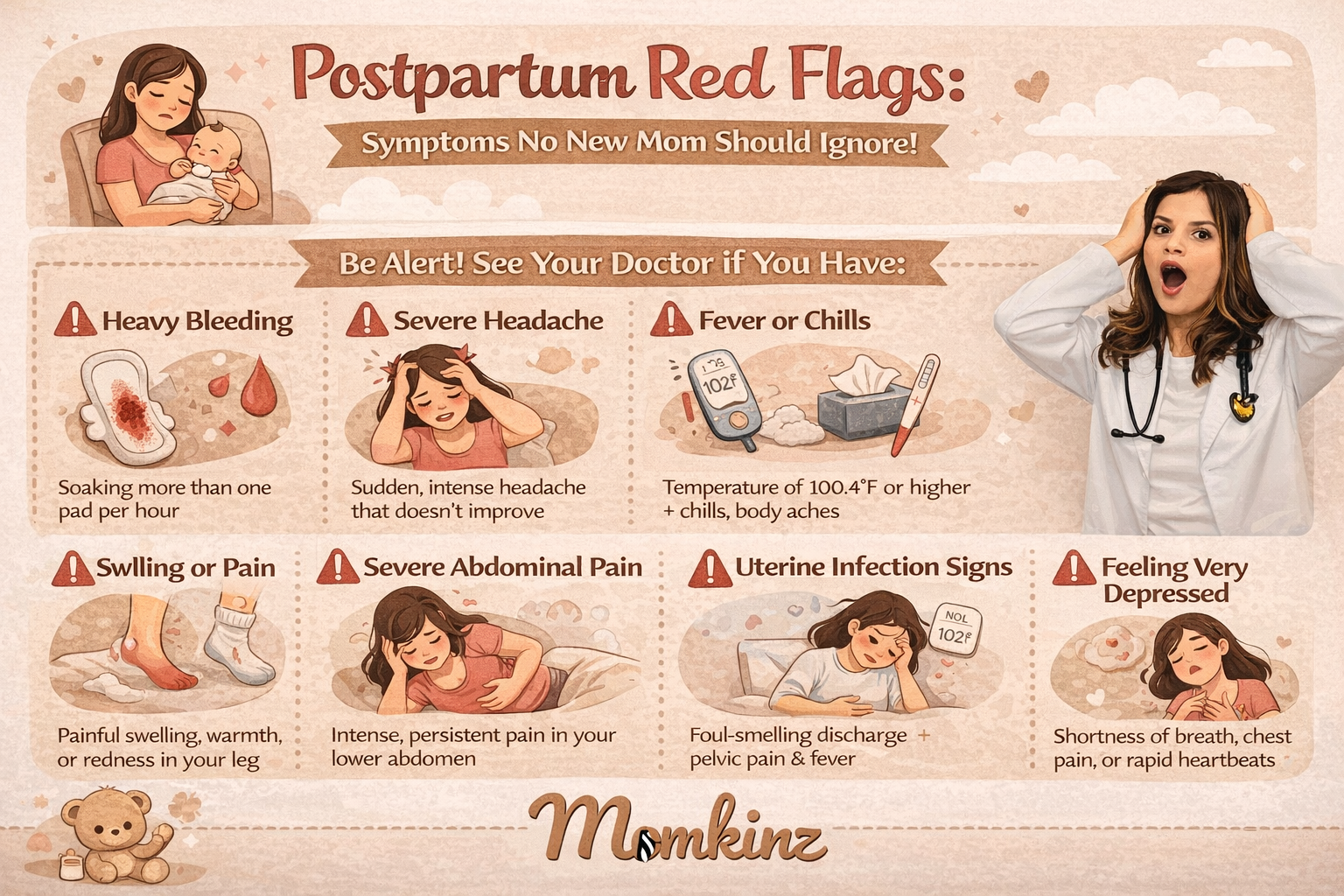
While many changes are normal after birth, certain symptoms always warrant attention. Heavy bleeding, signs of infection, severe headaches, chest pain, worsening mood symptoms, or thoughts of self-harm are never something to “wait out.” Below, we break down what’s expected vs. what’s alarming so you know when to call your doctor, when to go to the ER, and when to reach out for Momkinz postpartum support.
Save this post. Share it with your partner. Keep it handy during your postpartum recovery. Informed moms are safer moms and calmer ones, too.
Why This Matters?
After pregnancy and birth, your body is healing from one of the biggest physical and emotional transitions of your life. Most postpartum symptoms are normal, but some are red flags. The challenge? Sleep deprivation, pain, and hormone shifts can blur the line. My goal here is gentle clarity, not fear. You deserve straightforward guidance that respects your intuition and your time. If something feels “off,” trust that feeling.
Is This Bleeding Too Heavy or Lasting Too Long?
What’s expected
- Vaginal bleeding (lochia) that starts heavy and bright red, then gradually lightens
- Bleeding that tapers over 2–6 weeks
- Small clots (smaller than a grape), especially after resting
🚩 Red flags
- Soaking one pad an hour (or more) for 2 hours
- Passing clots larger than a golf ball
- Bleeding that suddenly gets heavier again after improving
- Dizziness, fainting, racing heart
What to do
- Call your provider immediately or go to the ER. This could be a postpartum hemorrhage
- Tip: Keep a postpartum recovery kit nearby (pads, peri bottle, ice packs) and note changes you see
Could My Headache Be a Dangerous Sign?
What’s expected
- Mild headaches from sleep deprivation, dehydration, or tension
- Headaches that improve with rest, fluids, or gentle pain relief
🚩 Red flags
- A severe, persistent headache that won’t go away
- Headache with visual changes, nausea, or sensitivity to light
- Headache with high blood pressure, swelling of face/hands, or right-upper abdominal pain
What to do
- Seek urgent care. This may signal postpartum preeclampsia
- Tip: Track your blood pressure at home if advised; don’t dismiss “just a headache.”
How Do I Know If I Need Emergency Care After Birth?
Go to the ER or call emergency services if you have:
- Chest pain, shortness of breath, or coughing up blood (possible clot)
- Severe abdominal pain is not improving
- High fever (≥100.4°F / 38°C) with chills
- Seizures, confusion, or sudden weakness
- Uncontrolled bleeding or signs of shock
What to remember
- Emergencies can happen weeks after birth, not just in the hospital
- You are not overreacting. Prompt care saves lives.
Is This Pain Normal or a Sign of Infection?
What’s expected
- Soreness at stitches/incision sites
- Cramping with breastfeeding
- Gradual improvement day by day
🚩 Red flags
- Fever with uterine tenderness
- Foul-smelling discharge
- Redness, warmth, pus, or worsening pain at the incision/stitches
- Burning with urination or pelvic pain
What to do
- Call your postpartum care provider. Early treatment prevents complications
- Tip: Keep a thermometer accessible; document symptoms and timing
Is My Mood “Baby Blues” or Something More?
What’s expected
- Tearfulness, mood swings, irritability in the first 1–2 weeks
- Emotions that come and go, and still allow moments of joy
🚩 Red flags
- Symptoms lasting longer than 2 weeks
- Feeling numb, hopeless, or disconnected from your baby
- Panic attacks, constant worry, intrusive thoughts
- Thoughts of harming yourself or your baby
What to do
- Reach out now to your provider, a trusted person, or Momkinz postpartum support
- If there’s immediate danger, seek emergency care
- Remember: postpartum depression symptoms and postpartum anxiety are medical conditions, not failures
Why Is My Blood Pressure Still High Postpartum?
What’s expected
-
Mild fluctuations as your body adjusts
🚩 Red flags
- Readings consistently ≥140/90
- Headache, vision changes, swelling, nausea
What to do
- Call your provider promptly; postpartum preeclampsia can occur after delivery
- Tip: Home BP monitors can be helpful to bring readings to appointments
Save-Worthy Checklist: Postpartum Red Flags at a Glance
🟫 Soaking a pad/hour or large clots
🟫 Fever ≥100.4°F with chills
🟫 Severe headache + vision changes
🟫 Chest pain or shortness of breath
🟫 Worsening incision pain/redness
🟫 Severe abdominal pain
🟫 Persistent high blood pressure
🟫 Thoughts of self-harm or harming the baby
If you check any box, pause and get help.
Momkinz Tips & Insights
- Trust your instincts. You know your body best. If something feels wrong, it probably is.
- Don’t wait for your 6-week visit. Many serious issues happen earlier.
- Loop in your support system. Share this list with your partner or caregiver.
- Prepare before you need it. Thermometer, BP cuff (if advised), pads, peri bottle, ice packs.
- Care for your mental health like your physical health. Mood red flags are just as urgent.
Momkinz is built to be mom-first, connecting you to postpartum care providers and postpartum support professionals who listen, act, and follow through.
How Momkinz Helps When You Notice a Red Flag
- Find postpartum support groups near me for connection and reassurance
- Connect with postpartum care providers who understand recovery beyond six weeks
- Access maternal mental health resources for anxiety, depression, and intrusive thoughts
- Get guidance without judgment because clarity calms fear
Don’t Wait Alone
If you notice any red flags or you’re unsure, reach out today.
Visit Momkinz to connect with care, community, and clear next steps. You deserve support that meets you where you are.
You’re doing an incredible job.
Knowing the red flags doesn’t make you anxious it makes you empowered.
Postpartum Red Flags: 10 FAQs (2026)
1) How long should postpartum bleeding last?
Typically 2–6 weeks, gradually lightening. Sudden heavy bleeding is not normal.
2) Are clots normal after birth?
Small clots can be. Large clots (golf-ball size or bigger) are a red flag.
3) Can preeclampsia happen after delivery?
Yes. Postpartum preeclampsia can occur days to weeks after birth.
4) When is a headache an emergency postpartum?
When it’s severe, persistent, or paired with vision changes or high BP.
5) What fever should I worry about?
A temperature of 100.4°F (38°C) or higher, especially with chills or pain.
6) How do I know if my incision is infected?
Increasing pain, redness, warmth, swelling, pus, or fever.
7) Are panic attacks postpartum common?
Yes, postpartum anxiety can include panic. Persistent or worsening symptoms need care.
8) What should partners watch for?
Heavy bleeding, severe pain, mood changes, confusion, or breathing issues.
9) Is it okay to call my doctor “just to check”?
Always. It’s better to call early than wait.
10) Where can I find postpartum support right now?
Visit Momkinz for postpartum support professionals, groups, and care providers.