
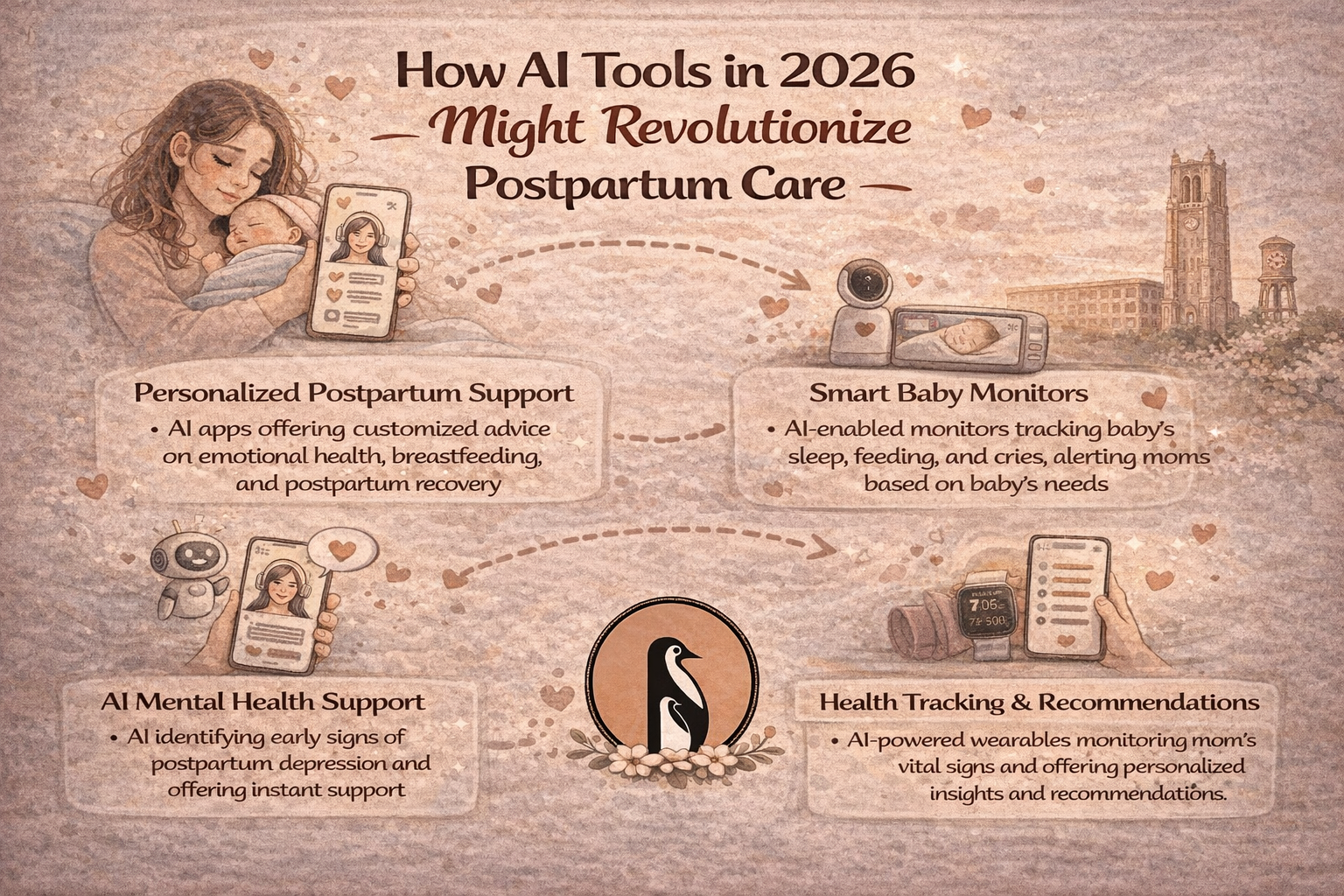
Yes! AI tools can help us postpartum, but not because they’re “smart.” They help because we are exhausted, overwhelmed, and often alone in the in-between moments. In 2026, the AI tools moms are actually using aren’t replacing doctors or instincts. They’re helping us organize our thoughts, understand our bodies, catch mental health red flags earlier, and feel supported between appointments. This post isn’t here to push tech. It’s here to talk honestly about how AI is quietly fitting into real postpartum life.
Postpartum care is improving, but gaps still exist, especially between appointments, during nights, and in moments when we’re unsure whether something is “serious enough” to call about. From a medical and maternal mental health standpoint, those gaps are where anxiety grows and where postpartum depression symptoms can quietly intensify.
In 2026, AI has stepped into those gaps not as a replacement for postpartum care providers, but as a bridge.
What are the AI tools moms are actually using postpartum in 2026?
They aren’t robots, and they aren’t scary systems taking over care. They’re not replacements for doctors, therapists, or postpartum support professionals either. Most of the tools moms turn to are quiet helpers, simple, low-pressure supports that sit in the background of daily life. They help reduce mental load when our brains feel foggy, organize thoughts when everything feels jumbled, and support emotional health during the long stretches between real medical care and human connection.
These tools aren’t about fixing us. They’re about giving us a little breathing room when postpartum feels heavy. Let’s walk through what these tools actually look like, one by one, in plain, human language, no tech jargon, no pressure, just clarity.
AI Mental Health Support Apps (Doctor-Backed)
These are some of the most widely used AI tools postpartum, and they’re supported by psychologists and psychiatrists.
Wysa
Moms often use this type of AI mental health app to talk through anxious thoughts at night, especially when everyone else is asleep, and their mind won’t slow down. It offers guided, CBT-based exercises that help gently reframe racing thoughts without pressure to “fix” anything, and it allows for mood tracking without judgment, so patterns can be noticed over time instead of ignored or feared. For many moms, it becomes a calm, neutral space to unload emotions safely, especially during moments when postpartum anxiety or emotional overwhelm feels hardest.
Why does it help postpartum?
- It responds calmly (no alarmist language)
- It helps moms name emotions linked to postpartum anxiety
- It encourages seeking real help when patterns worsen
This is not therapy, it’s emotional first aid.
Woebot
Woebot is something many moms turn to when they need emotional support that feels simple, private, and non-overwhelming. Moms often use it for short, structured check-ins that fit into nap times or late-night feedings, helping them pause and reflect without pressure. Through gentle, guided conversations, Woebot helps moms understand how their thoughts influence their mood and emotions, an especially important skill during the vulnerable postpartum period. Over time, these check-ins can also help moms recognize early signs of postpartum depression, empowering them to seek help sooner and feel more in control of their mental health journey.
Why it’s trusted:
- Built with clinical psychologists
- Backed by multiple peer-reviewed studies
- Designed to reduce spiraling, not feed it
Many moms say it helps when they “don’t know what they’re feeling yet.”
Youper
This is often used by moms who want to better understand their emotional patterns over time, especially during the postpartum phase when days can blur together. Moms use Youper to track mood trends across weeks, helping them notice patterns they might otherwise miss. It also supports connecting emotions with real-life factors like sleep deprivation, stress, and daily demands, which can be incredibly validating for new moms who feel “off” but don’t know why. Many moms find it especially helpful for preparing the right words before doctor or therapy appointments, making it easier to clearly explain how they’ve been feeling and advocate for the care they need.
Why is it useful in postpartum?
- Helps answer “Has this been getting worse?”
- Supports conversations with postpartum care providers
AI Journaling & Emotional Processing Tools
This is a huge trend in 2026, especially for moms who feel too tired to write.
Guided AI Journaling (various apps & platforms)
Guided AI journaling is something many moms lean on when typing feels like too much, and they just need to talk it out. Moms use it to speak instead of type, letting their thoughts flow naturally during moments of overwhelm, exhaustion, or emotional fog. With gentle, prompt-based guidance, these tools help untangle emotions when everything feels mixed together, offering direction without pressure. They’re especially helpful for capturing real, raw thoughts without needing “pretty words” or perfectly formed sentences, just honest moments, exactly as they are.
-
Reflectly – Reflectly uses AI-powered prompts to help moms gently reflect on their emotions and daily experiences. It’s especially helpful when feelings feel overwhelming, offering guided questions that make it easier to process moods, stress, and gratitude without overthinking what to write.
-
Day One – Day One is a flexible journaling app that lets moms capture thoughts through text, voice notes, photos, or quick entries. It’s ideal for documenting postpartum moments, emotional check-ins, and memories—without pressure to be consistent or eloquent.
-
Journey – Journey focuses on mental wellness by combining journaling with mood tracking and reflective prompts. Moms often use it to notice emotional patterns over time and create a safe habit of checking in with themselves, even on the busiest days.
Why does this help postpartum?
- Emotional expression lowers stress hormones
- Journaling supports postpartum recovery and mental health
- Talking it out often feels easier than writing
Some moms use voice-to-text journaling while feeding or rocking. That counts.
AI Symptom Education Tools (Physician-Reviewed)
AI symptom education tools, especially those that are clinician- or physician-reviewed, can be a grounding resource for moms who are trying to understand their bodies without spiraling into fear. These tools help moms sort through what’s normal in postpartum recovery versus what truly needs medical attention, all without doomscrolling at 2 a.m. They’re often used to answer questions about postpartum bleeding, understand the difference between pain and expected healing, recognize mood changes versus mental health red flags, and build awareness around blood pressure–related symptoms that shouldn’t be ignored. For many moms, this kind of guidance offers clarity, reassurance, and confidence to seek care when it’s truly needed.
Here are a few AI-powered symptom education tools moms often use:
-
Ada
Ada uses AI-driven, clinically reviewed questions to help moms assess symptoms in a clear, non-alarming way. It’s commonly used for postpartum concerns like bleeding patterns, pain levels, and mood changes, helping moms decide whether something can wait or needs medical attention. -
K Health
K Health combines AI symptom checking with access to licensed clinicians. Moms often use it to understand symptoms such as high blood pressure signs, postpartum pain, or emotional changes, and then transition smoothly into professional care if needed. -
Buoy Health
Buoy Health guides moms through symptom questions using data-informed pathways designed to reduce anxiety. It helps distinguish normal recovery symptoms from red flags, offering next-step guidance without overwhelming medical jargon.
These tools don’t replace a doctor, but for moms navigating postpartum uncertainty, they can be a calm first step toward understanding what their body is trying to say and when it’s time to ask for help
What they help with:
- Postpartum bleeding questions
- Pain vs. healing expectations
- Mood changes vs. red flags
- Blood pressure symptom awareness
AI Tools for Organization & Brain Fog
Postpartum brain fog is real and deeply documented, and in 2026, more moms are using AI not to do more, but to think more clearly. These tools are becoming a form of cognitive relief when memory feels patchy, words won’t come, and everything feels mentally heavy.
Moms use AI to gently draft messages to doctors when explaining symptoms feels overwhelming, organize symptom timelines before appointments so nothing important gets forgotten, and track sleep, mood, and feeding in one place instead of juggling multiple apps. Many also lean on AI to create soft, flexible routines that support healing without the pressure of rigid schedules. This isn’t productivity culture. It’s support for a brain that’s doing a lot while healing.
Here are a few AI tools moms often use for organization and brain fog support:
-
Notion
Notion is widely used by moms as a gentle “second brain.” With AI assistance, it helps organize symptom logs, appointment notes, feeding or sleep patterns, and even draft messages to healthcare providers—without needing everything to be perfect or structured. -
ChatGPT
Many moms use ChatGPT to help put their thoughts into words when brain fog makes communication hard. It’s commonly used to draft doctor messages, summarize symptoms, or create simple routines that feel supportive rather than overwhelming. -
Goblin Tools
Goblin Tools helps break down tasks into manageable steps and soften overwhelming to-do lists. Moms often use it during postpartum recovery to plan days gently, especially when executive function feels low. -
Huckleberry
Huckleberry uses smart insights to track sleep, feeding, and routines in one place. Moms appreciate it for reducing mental load—so they don’t have to remember everything while already running on very little rest.
These tools aren’t about optimizing motherhood. They’re about giving moms a little mental breathing room—so healing, clarity, and confidence can slowly come back, one supported step at a time.
AI Tools for Nighttime Reassurance
Late at night, when the house is quiet, the baby finally sleeps, and thoughts get loud. This is often when moms reach for AI. In those vulnerable hours, moms use AI to ask questions they’re afraid to say out loud, to quietly check if other moms feel this way too, and to calm racing thoughts when everyone else is asleep. This matters deeply because postpartum anxiety often peaks at night, when exhaustion and isolation collide. Having something calm, neutral, and non-judgmental to turn to can help stop a spiral before it turns into panic. Not to replace care but to steady the moment.
This matters just as much. AI tools are not meant to replace postpartum care providers, therapy, or medication, and they should never be used to diagnose postpartum depression or decide treatment plans. Their role is supportive, not clinical. Healthy AI use always points moms back to real humans: doctors, therapists, partners, friends, and trusted care teams who can truly listen, assess, and help. When used well, AI becomes a bridge to care, not a substitute for it.
Which AI Tool Is Right for Us?
If we’re feeling overwhelmed just reading about AI tools, let’s pause and soften this moment. We don’t need everything, we don’t need multiple apps, and we definitely don’t need to “do it right.” We only need the one thing that meets us where we are today. Choosing support can be gentle, not another decision that drains us.
If we feel anxious, panicky, or stuck in racing thoughts…
An AI mental health support app can be a helpful place to land. Tools like Wysa or Woebot are often used when thoughts loop at night, when we feel overwhelmed but can’t quite explain why, or when what we need is grounding, not advice.
If we feel emotionally full and need to get things out of our heads…
Guided AI journaling or voice-note tools can offer relief when emotions feel tangled. These are especially helpful when writing feels exhausting, when we’d rather talk than type, or when we just need somewhere safe to unload without being interrupted.
If we’re wondering, “Is this normal postpartum or should I call someone?”
Physician-reviewed AI symptom education tools can help us find clarity without panic. They’re useful when physical recovery feels confusing, when bleeding, pain, or mood changes raise questions, or when we want reassurance without spiraling.
If we feel mentally scattered and can’t organize our thoughts…
AI organization and planning tools can ease the cognitive load that comes with postpartum brain fog. They’re helpful when remembering symptoms feels hard, when we want support drafting messages to doctors, or when everything feels mentally heavy all at once.
If nights are the hardest and we feel alone when everyone sleeps…
A calm, non-judgmental AI chat tool can help hold space in those quiet, heavy hours. These tools are often used when anxiety spikes at night, when we don’t want to wake anyone, or when we need reassurance rather than answers.
One Important Reminder Before We Choose
AI tools work best when we choose one, not many, when we use them gently instead of obsessively, and when we let them guide us back toward real support. If a tool increases anxiety, guilt, or pressure, it’s not the right fit for us. Support should feel steady, not heavy.
How Momkinz Helps Us Go Beyond AI
AI can help us recognize what we need, but Momkinz helps us find the people who can support it. When a tool helps us realize “I need to talk to someone,” “This isn’t just exhaustion,” or “I shouldn’t carry this alone,” that’s where Momkinz steps in, connecting us to postpartum support groups near us, compassionate postpartum care providers, and professionals who truly understand maternal mental health. Because while AI can support awareness, healing happens best with a human connection
FAQs (2026)
1. Is it safe to use AI tools postpartum?
Yes, when used responsibly and alongside real care.
2. Can AI help with postpartum anxiety?
It can support awareness and grounding, not replace treatment.
3. Can AI diagnose postpartum depression?
No. Diagnosis requires a qualified healthcare provider.
4. Why are moms using AI late at night?
Because support often isn’t available when emotions peak.
5. Are AI mental health apps doctor-backed?
Some are always looking for clinical involvement and studies.
6. Can AI replace postpartum support groups?
No, but it can help moms reach them sooner.
7. Does using AI mean I’m avoiding real help?
Often it’s the first step toward seeking it.
8. Can AI help with journaling postpartum?
Yes, many moms find it easier than writing alone.
9. How do I know when to seek human care?
When symptoms persist, worsen, or feel overwhelming.
10. Where can we find postpartum support beyond AI?
Through Momkinz postpartum support.