
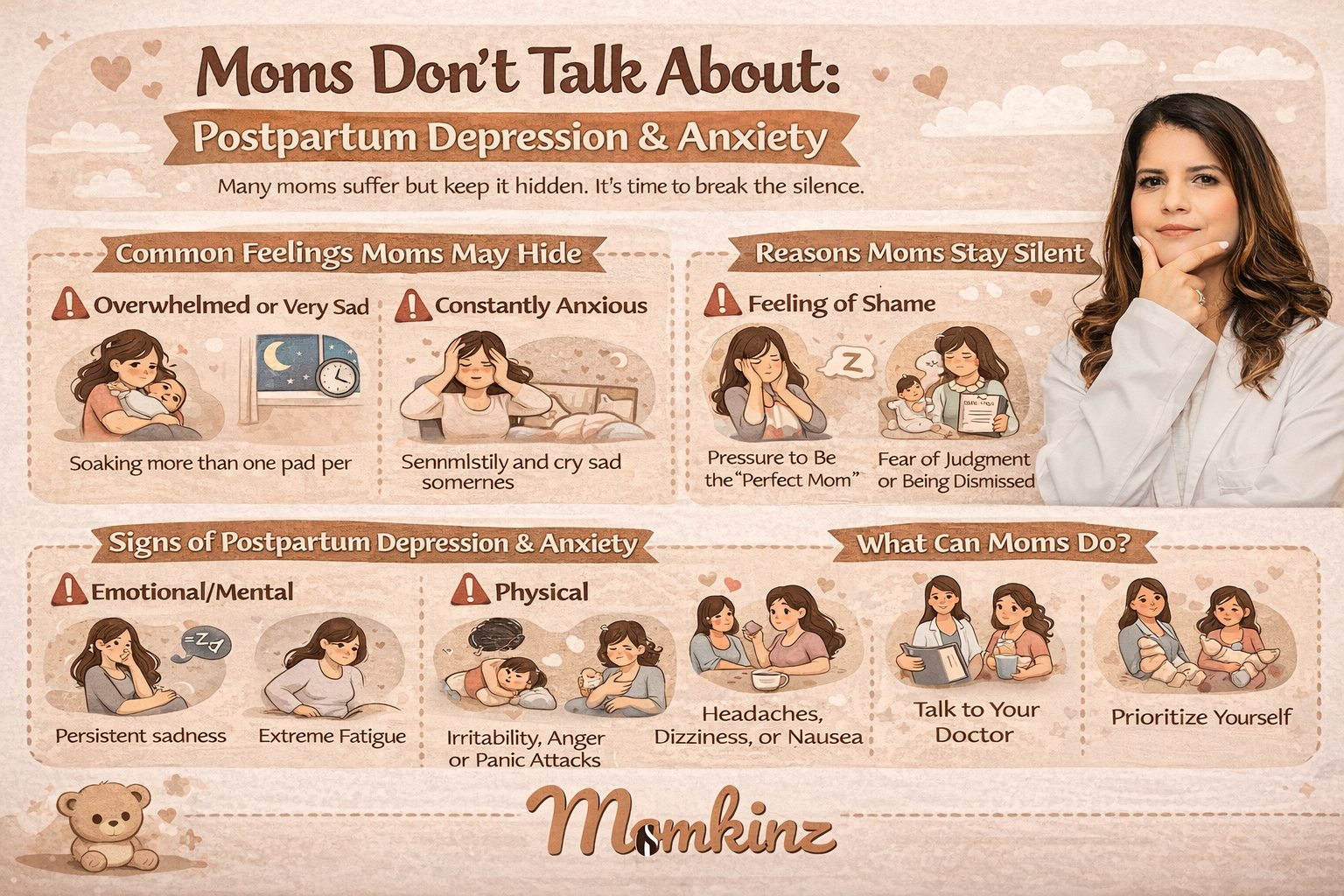
Many new moms experience hidden struggles after birth. You’re not alone if you’re feeling anxious, sad, numb, or overwhelmed. This post shares real stories and expert guidance on how to tell the difference between “baby blues” and postpartum depression or anxiety, and when to ask for help. It’s okay to admit it’s hard. Let’s talk about what really helps.
Why This Conversation Matters
We talk about swaddles and sleep schedules. We trade feeding tips and stroller hacks. But what we don’t talk about enough, the thing many moms carry quietly at 2 a.m., is how heavy postpartum can feel.
A friend once confided, “I cried during midnight feedings not because I was tired, but because I felt empty and scared. I loved my baby. I just didn’t recognize myself.”
So many moms silently experience this. And silence is what keeps suffering going longer than it should.
As a physician and a mom, I want to normalize this: postpartum depression and postpartum anxiety are common, medical, and treatable. You are not weak. You are not failing. You are human, and you deserve support.
How Do I Know If This Is More Than Just ‘Baby Blues’?
What’s common (and usually temporary):
- Tearfulness, irritability, and mood swings in the first 1–2 weeks
- Feeling overwhelmed but still having moments of joy
- Symptoms that improve with rest, reassurance, and time
When it may be more (postpartum depression symptoms):
- Sadness, numbness, or hopelessness lasting longer than two weeks
- Loss of interest or pleasure
- Guilt or shame that feels constant
- Difficulty bonding with your baby
- Changes in sleep or appetite beyond newborn life
- Thoughts like “They’d be better off without me.”
When anxiety takes center stage (postpartum anxiety):
- Constant worry you can’t shut off
- Panic attacks or racing thoughts
- Intrusive, unwanted thoughts that scare you
- Avoiding situations out of fear that something bad will happen
Medical note: Baby blues fade. PPD and PPA persist and intensify without care. If you’re unsure, that’s your sign to reach out.
Why Do I Feel Scared or Sad When I Should Be Happy?
This is one of the most painful questions moms ask because it comes with guilt.
Here’s what’s happening beneath the surface:
- Hormonal shifts after pregnancy affect mood regulation
- Sleep deprivation amplifies anxiety and low mood
- Identity changes can bring grief alongside love
- Pressure to feel grateful creates shame when you don’t
Feeling scared or sad does not mean you regret your baby. It means your nervous system is overloaded and asking for care.
Community quote we hear often at Momkinz: “I loved my baby fiercely and still felt afraid all the time. I thought love should cancel fear. It didn’t.”
Love and anxiety can coexist. Treatment helps separate them.
How Can I Start Talking About This Without Feeling Guilty?
Guilt keeps moms quiet. Conversation opens doors.
Try starting with one of these:
- “I’m not okay, and I need help figuring this out.”
- “I’m feeling anxious/sad more days than not.”
- “I’m scared to say this out loud, but I’m struggling.”
Who to tell first:
- Your postpartum care provider
- A therapist or postpartum support professional
- A trusted friend or family member
- A support group where other moms get it
Tip: Bring notes. When emotions are heavy, writing symptoms down helps you be heard.
Save-Worthy Coping Tools (Gentle, Practical, Real)
✍️ Journaling Prompts (5 minutes)
- “Today feels hardest when…”
- “One small win today was…”
- “What support would help me right now?”
💬 Affirmations (Repeat, even if they feel awkward)
- “This is hard, and I’m allowed to ask for help.”
- “My feelings are information, not failures.”
- “I don’t have to do this alone.”
🧘♀️ 60-Second Grounding
- One hand on chest, one on belly
- Inhale 4 seconds, exhale 6 seconds (5 rounds)
🧠 Body Basics That Support Mood
- Hydration and regular meals
- Gentle movement (stretching, a short walk)
- Continue prenatal vitamins postpartum or Omega-3s (ask your provider)
Helpful tools: a Wellness Journal, calming routines, and check-ins with professionals.
What Actually Helps
- Early screening changes outcomes. Don’t wait for your 6-week visit.
- Treatment is individualized. Therapy, medication, or both can help.
- Connection is medicine. Support groups reduce isolation and fear.
- Partners matter. Share this post; ask them to help watch for signs.
- Care should be mom-first. You deserve follow-up, not dismissal.
Momkinz is built as a postpartum, maternal mental health, mom-first platform connecting you to care that listens, acts, and follows through.
Real Talk: What Recovery Can Look Like
Recovery isn’t linear. Some days are lighter; others feel heavy again. That doesn’t mean treatment isn’t working—it means healing takes time.
With support, many moms report:
- Quieter thoughts
- Fewer panic spikes
- More moments of calm and connection
- A growing sense of “I can handle this.”
You don’t need to be “fixed.” You need to be supported.
Let’s Break the Silence Together
If anything here resonated, let that be your next step.
At Momkinz, you can:
- Find postpartum support groups near me
- Connect with trusted postpartum care providers
- Access compassionate postpartum support professionals
- Get guidance for postpartum recovery, physical and emotional
👉 Visit Momkinz and choose support that meets you where you are.
It’s okay to admit it’s hard. We’re here to help.
You are not broken. You are becoming, and you deserve support while you do.
FAQs (2026 Edition)
1) How common are postpartum depression and anxiety?
Very common. Many moms experience one or both.
2) Can I have anxiety without feeling depressed?
Yes. Postpartum anxiety can occur on its own.
3) Do intrusive thoughts mean I’ll act on them?
No. They’re unwanted and treatable; talk to a professional.
4) When should I seek help?
If symptoms last >2 weeks, worsen, or scare you—now.
5) Is medication safe postpartum?
Many options are safe; discuss risks/benefits with your provider.
6) Will therapy really help?
Yes, especially therapy tailored to postpartum needs.
7) What if I’m breastfeeding?
There are breastfeeding-compatible treatments; ask.
8) Can partners help?
Absolutely, support and shared care make a difference.
9) Are support groups effective?
Yes. Shared experience reduces isolation and shame.
10) Where do I start today?
Start at Momkinz to find care and community.
RELATED ARTICLE: Postpartum Depression, Anxiety, and Stress