
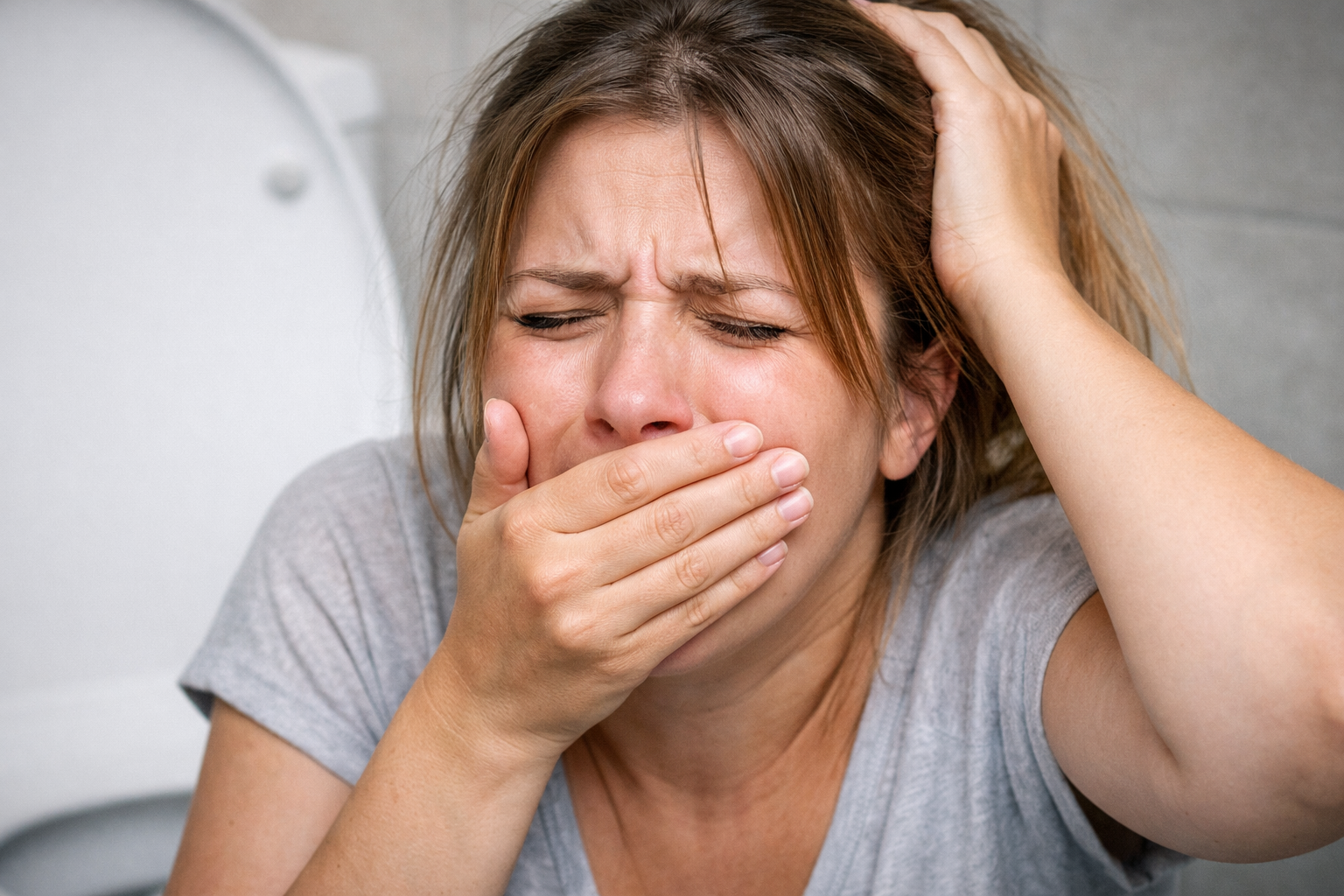
There is a kind of sickness during pregnancy that goes far beyond morning nausea.
The kind that keeps us on the bathroom floor.
The kind that makes food impossible, water unbearable, and days blur into survival.
The kind that steals joy before we even realize it’s gone.
Many of us were told it was “just nausea.”
That we should be grateful.
That it would pass.
But for some of us, it didn’t.
And now, research is finally putting words to what so many moms have felt quietly for years: severe pregnancy nausea is deeply connected to depression before birth and long after postpartum.
This blog is inspired by a recent study highlighted by FemTech World
But more importantly, it’s inspired by us, the moms who lived through it.
When Pregnancy Becomes Survival, Not Celebration
We don’t talk enough about how pregnancy sickness can break us emotionally.
Hyperemesis gravidarum is severe, relentless nausea and vomiting that affects a small percentage of pregnancies, but when it happens, it consumes everything. We stop eating. We stop functioning. We stop recognizing ourselves.
And while our bodies are struggling, something else is happening quietly inside us:
Our mental health is unraveling.
The study followed over 437,000 women and found something painful but validating:
- Women with severe pregnancy nausea were over five times more likely to already have depression before pregnancy.
- They were more than three times more likely to develop depression after childbirth.
- And they were diagnosed earlier postpartum, suggesting the emotional toll doesn’t fade, it lingers.
Many of us read this and felt seen for the first time.
Because when we were sick, we weren’t just sick
we were scared.
isolated.
ashamed.
alone.
The Emotional Weight No One Prepared Us For
When pregnancy sickness is severe, it strips away the parts of pregnancy people celebrate.
There are no glowing photos.
No joyful cravings.
No excitement over baby kicks.
Instead, there’s guilt.
Because we feel miserable when we’re “supposed” to be happy.
Many moms silently experience this emotional conflict:
- Loving our baby but hating pregnancy
- Feeling weak for not coping “better.”
- Wondering why our bodies betrayed us
- Feeling disconnected from others who seem fine
And depression doesn’t always arrive loudly.
Sometimes it slips in quietly, disguised as exhaustion, numbness, or hopelessness.
We may not even realize we’re depressed; we just know something feels wrong.
Why Severe Nausea and Depression Are Connected
The research suggests something important: severe pregnancy nausea and depression may share biological roots.
This means:
- Hormonal shifts
- Stress responses
- Nervous system overload
- Inflammation pathways
Our bodies and brains are under constant assault when we can’t eat, sleep, or hydrate properly. And when that happens for weeks or months, our mental health doesn’t stand a chance without support.
This is not a weakness.
This is physiology.
And yet, so many of us were sent home with anti-nausea meds and no mental health check-in. We were treated for symptoms not for the whole person.
After Birth, When We Expect Relief But Feel Worse
We’re told things will get better after delivery.
Sometimes they do.
But for many moms who endured severe nausea, the emotional crash comes later.
After birth, we may experience:
- Postpartum depression
- Postpartum anxiety
- Emotional numbness
- Delayed bonding
- A sense of grief for the pregnancy we lost
The study found that moms who experienced severe nausea were diagnosed with depression earlier postpartum, not because they were weaker, but because the foundation had already cracked.
And many of us blame ourselves:
“Why can’t I enjoy this?”
“Why am I still sad?”
“Shouldn’t I feel better now?”
But healing doesn’t follow a schedule.
A Mom-to-Mom Truth: We Didn’t Imagine This Pain
If you suffered through pregnancy sickness and later struggled emotionally, please hear this:
You didn’t imagine it.
You didn’t exaggerate it.
You didn’t fail.
Your body endured trauma.
Your mind absorbed it.
And your heart is still processing it.
Many moms silently experience the grief of survival-mode pregnancy, followed by postpartum emotions they don’t recognize.
This is why support matters.
This is why screening matters.
This is why community matters.
What We Wish Every Mom Knew
These are not instructions.
They’re gentle truths we wish someone had told us.
1. Severe nausea is not “just physical.”
If you struggled during pregnancy, your mental health deserves attention, too.
2. Postpartum depression doesn’t always start postpartum
Sometimes it begins in pregnancy, and we carry it quietly.
3. Early screening can change everything
Mental health check-ins during and after pregnancy save lives.
4. Multidisciplinary care matters
We need OBs, primary care, and mental health professionals working together, not separately.
5. Healing is allowed to take time
There is no deadline for feeling okay again.
Where Hope Lives Even After a Hard Pregnancy
This research doesn’t exist to scare us.
It exists to protect us.
It tells us that what we felt was real.
That our pain had meaning.
That future moms can be supported sooner.
And it reminds us that motherhood stories are not one-size-fits-all.
Some of us survived pregnancy.
Some of us mourned it.
Some of us are still healing years later.
All of those experiences are valid.
We Heal Better Together
If you are a mom who:
- suffered severe nausea during pregnancy
- feels emotionally changed afterward
- struggles with postpartum depression or anxiety
- feels unseen or unheard
We want you to know: you belong here.
Momkinz exists to connect moms with:
- postpartum support professionals
- mental health care for moms
- compassionate postpartum care providers
- supportive communities that understand
Visit Momkinz and find the support we all deserve during pregnancy, postpartum, and beyond.
Because motherhood is not meant to be endured alone. And healing happens faster when we’re held.
FAQs About Severe Pregnancy Nausea & Depression
1. What is hyperemesis gravidarum?
A severe form of pregnancy nausea and vomiting that disrupts daily life.
2. Can severe nausea cause depression?
Research shows a strong link between severe nausea and depression before and after pregnancy.
3. Is postpartum depression always caused by birth?
No. It can begin during pregnancy and continue postpartum.
4. Why wasn’t my mental health screened during pregnancy?
Mental health screening is still inconsistent, though research supports it.
5. Does nausea-related depression go away on its own?
Not always. Support and treatment can make a big difference.
6. Can I still bond with my baby after a hard pregnancy?
Yes. Bonding can take time, and that’s okay.
7. Should I tell my provider about past pregnancy sickness?
Absolutely. It provides important context for your mental health.
8. Are there biological reasons for this connection?
Yes. Hormones, stress responses, and inflammation may play a role.
9. Is it normal to grieve my pregnancy experience?
Yes. Grief is a valid response to prolonged suffering.
10. Where can I find postpartum mental health support?
Momkinz connects moms with trusted postpartum support professionals and care providers.
RELATED ARTICLES: Pregnancy Hormones vs. Postpartum Hormones