
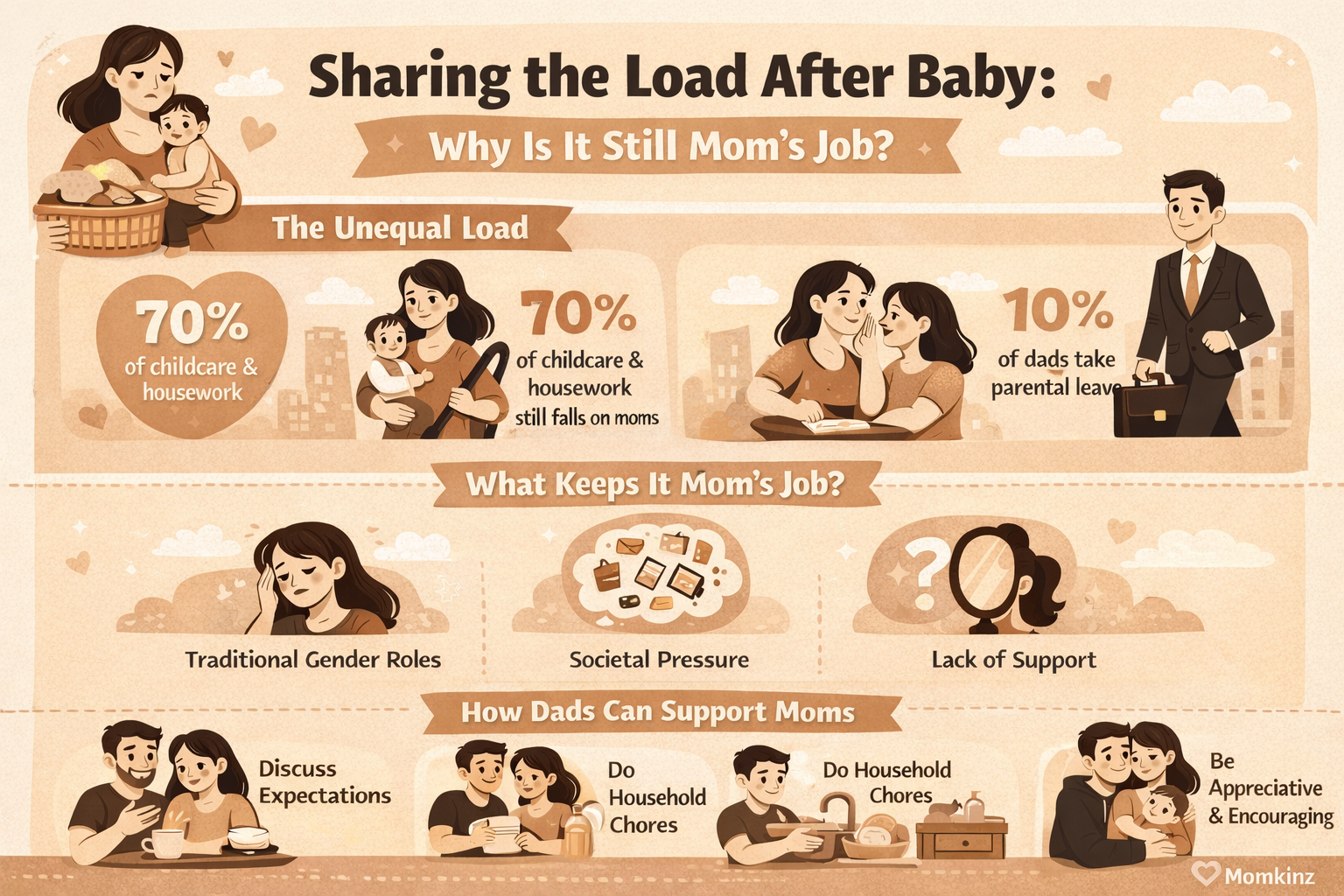
Even in 2026, many moms still carry more of the load after baby, even when their husbands are supportive, working full-time, or when moms earn more.
The imbalance isn’t about love or intention. It’s about outdated roles, invisible labor, and a lack of clear systems. The good news? Husbands can step up in meaningful ways that protect a mom’s postpartum recovery and mental health.
If you’re feeling exhausted, resentful, or quietly overwhelmed, you’re not alone—and this conversation matters.
Why This Conversation Matters for Moms Right Now
After pregnancy and birth, everything shifts in your body, hormones, sleep, and emotional capacity. Yet in many households, the old script quietly returns:
- Mom manages the baby
- Mom tracks the schedules
- Mom remembers everything
- Mom holds the mental load
Even when husbands are loving and present, research continues to show that moms still perform more household labor and childcare postpartum, which contributes directly to postpartum anxiety, burnout, and postpartum depression symptoms.
This isn’t about blaming husbands.
It’s about redefining teamwork during one of the most vulnerable seasons of a woman’s life.
Why Am I Still Doing More Even Though My Husband Helps?
This is one of the most common questions moms ask—and it’s not because you’re “better at it.”
Here’s what’s often happening behind the scenes:
- Default roles resurface during exhaustion
- Invisible labor (planning, remembering, worrying) falls on moms
- Quick fixes replace systems (“I’ll just do it”)
- Husbands help but don’t fully own tasks
Help vs. Ownership (This Is the Difference)
- Helping: “Tell me what you need.”
- Ownership: “I handle nights on Tuesdays and Thursdays. I’ll plan and follow through.”
Chronic overload increases stress hormones, disrupts sleep, and raises the risk of postpartum mood disorders. Fair division of labor is not a relationship luxury; it’s a postpartum health intervention.
Is This Imbalance Affecting My Mental Health, or Am I Just Tired?
Both can be true.
Many moms experience:
- Irritability or emotional numbness
- Constant mental chatter
- Resentment toward their husband
- Guilt for wanting help
- Increased postpartum anxiety
When the imbalance continues, it can deepen postpartum depression symptoms and delay postpartum recovery.
If you’re thinking:
“I love my husband, but I feel invisible.”
That’s not a personal failure. That’s a system problem.
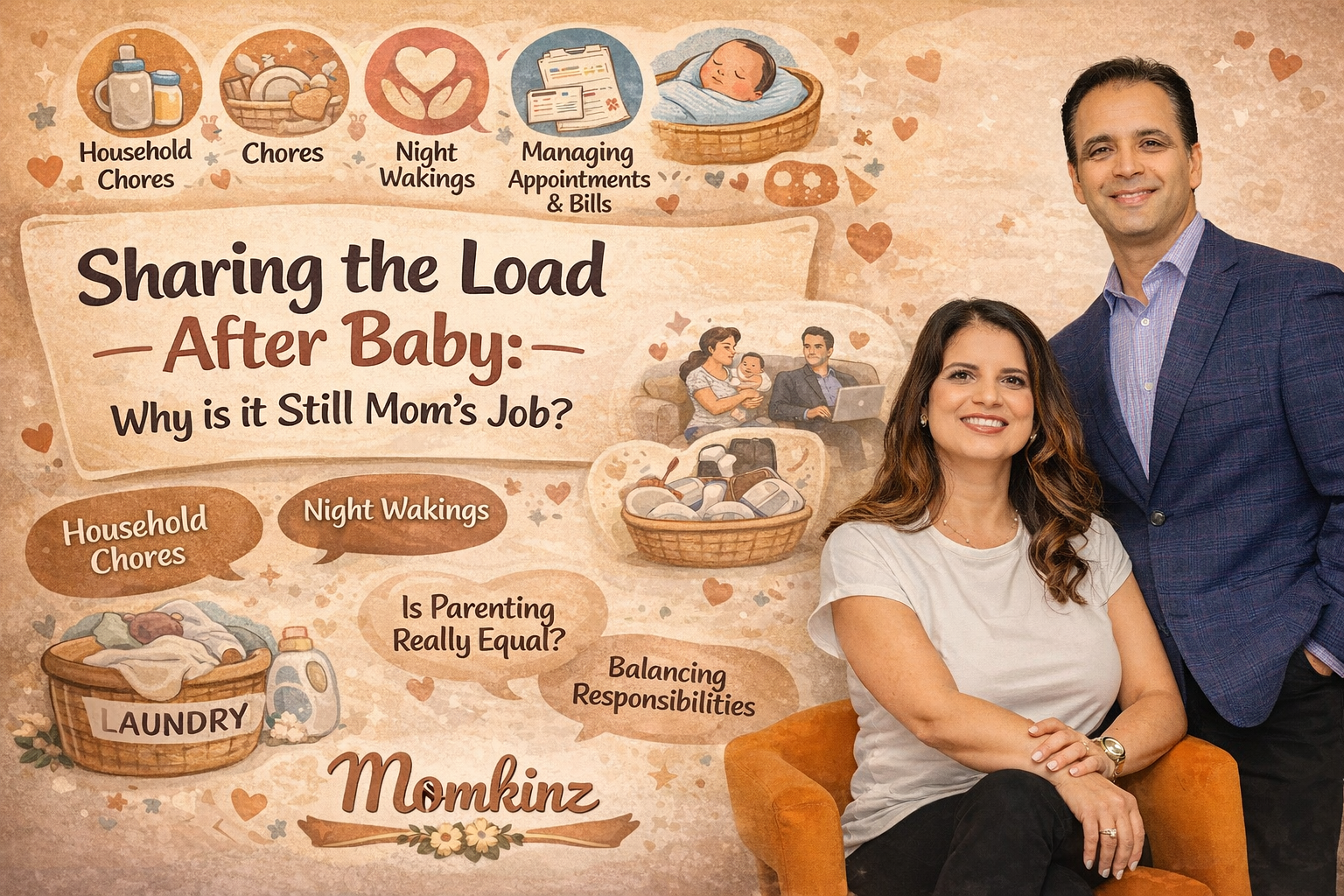
How Can I Talk to My Husband Without Starting a Fight?
Timing and language matter especially postpartum.
Try this calm, direct script:
“I’m still recovering physically and emotionally. For my mental health, I need us to rebalance responsibilities. Can we decide who owns which tasks for the next two weeks and reassess?”
Tips that help:
- Choose a neutral moment (not 2 a.m.)
- Use short trial periods
- Write everything down; sleep deprivation ruins memory
- Focus on recovery, not fairness debates
This isn’t about winning. It’s about protecting your health.
What Does Sharing the Load with My Husband Actually Look Like?
Sharing the load means shared responsibility, not supervision.
Save-Worthy Checklist: Tasks Husbands Can Fully Own
- Night feedings (or morning baby duty)
- Laundry from start to finish
- Meal planning and cooking
- Grocery ordering
- Pediatric appointments
- Managing supplies (diapers, wipes, formula, pumping parts)
When husbands fully own tasks, moms regain mental space—and healing speeds up.
Real Stories: When Husbands Step Up (and Everything Shifts)
- “When my husband took over two nights a week, my anxiety dropped within days.”
- “He owns laundry now. I don’t think about it anymore and that alone changed my mood.”
- “Hiring a cleaner together felt like teamwork instead of failure.”
These aren’t grand gestures.
They’re systems, and systems outperform good intentions.
Save-Worthy Systems for Couples (2026 Edition)
Create a Weekly Chores Calendar
- Assign owners, not helpers
- Rotate tasks during postpartum recovery
- Review weekly for 10 minutes
Make the Invisible Visible
- Write down everything you think about in a day
- Divide planning, not just execution
Protect Sleep Like Medicine
- Guaranteed rest blocks for mom
- Clear night-shift schedules
Buy Back Time When Possible
- Cleaning services
- Grocery delivery
- Meal kits
- Postpartum doula or coach (coverage expanding in many areas)
Most moms say they don’t want “more things,” they want more rest.
What Actually Supports Postpartum Recovery
- Visibility creates fairness
- Clear roles reduce resentment
- Husbands need ownership, not instructions
- Support early to prevent burnout
- Mom-first care protects families long-term
Momkinz is a postpartum, maternal mental health, mom-first platform designed to help moms feel supported, not stretched thin.
When to Seek Outside Support
If resentment or emotional symptoms persist, support matters.
Consider:
- Postpartum support groups near me
- A postpartum care provider should screen for mood symptoms
- A postpartum support professional (doula, therapist, or coach)
Support isn’t weakness, it’s prevention.
You Don’t Have to Carry This Alone
You shouldn’t have to prove strength by doing everything yourself.
Visit Momkinz to:
- Find postpartum support groups
- Connect with postpartum care providers
- Explore postpartum support professionals
- Access tools that help husbands and moms work as a team
💬 Join the conversation:
What’s one task you wish your husband fully owned? You’re not the only one.
FAQs (2026)
1. Is it normal to feel resentful toward my husband postpartum?
Yes, especially with unequal labor.
2. Does sharing chores help postpartum mental health?
Yes. Fair division reduces anxiety and depression risk.
3. What if my husband thinks he’s already helping?
Shift from help to ownership with clarity.
4. Are postpartum doulas helpful for couples?
Yes, many improve communication and reduce stress.
5. Is hiring help part of recovery?
Absolutely. Time and rest are medical needs postpartum.
6. How often should we reassess responsibilities?
Weekly during early postpartum.
7. Can things be equal if I’m breastfeeding?
Yes, non-feeding tasks can be fully owned by your husband.
8. Does imbalance increase postpartum depression risk?
Yes, chronic overload is a known risk factor.
9. How do we prevent resentment?
Clear roles, written plans, and regular check-ins.
10. Where can we find postpartum support now?
Start at Momkinz for mom-first care.