
If we’ve looked in the mirror after pregnancy and birth and thought, “I used to be someone else,” we’re not broken, we’re becoming. Motherhood often triggers an identity shift that can feel like loss, confusion, grief, and growth all at once.
In 2026, more moms are finally naming this out loud: identity loss after birth is real, common, and deeply connected to postpartum mental health.
This post isn’t here to rush us into “finding ourselves again.” It’s here to sit with us while we figure out who we’re becoming.
Let’s Start With the Real Problem (The One We Whisper)
We love our babies.
And still…
We miss parts of ourselves.
We miss:
- The version of us that wasn’t always needed
- The woman who had time, energy, ambition, or quiet
- The identity we knew how to explain to others
And then the guilt hits.
How can we feel this way when we’re supposed to be grateful?
Let’s pause right here.
Missing who we were does not mean we regret becoming mothers.
It means something real has changed.
Motherhood doesn’t just add a role; it rearranges the entire sense of self.
Why Identity Loss Happens After Pregnancy and Birth
From both lived experience and medical understanding, this makes sense.
After pregnancy and birth, we experience:
- Hormonal shifts that affect mood and perception
- Sleep deprivation that blurs emotional processing
- A sudden change in how the world sees us
- A loss of autonomy and uninterrupted time
- New responsibilities that never “turn off.”
Our brains are literally rewired for caregiving.
But no one prepares us for the emotional side effects:
The feeling that the old “me” disappeared overnight.
This is one reason identity loss is closely linked with:
- Postpartum anxiety
- Postpartum depression symptoms
- Emotional numbness or grief
- Feeling disconnected from ourselves
This isn’t a weakness. It’s a transformation without a roadmap.
A Real Mom Moment (You’re Not Alone Here)
One mom shared:
“Everyone kept asking how the baby was. No one asked how I was. I started wondering if I still existed.”
Many of us have felt that. We become “mom” so quickly that the rest of our identity fades into the background, not because it’s gone, but because it’s no longer centered.
“Why Do We Feel Like We Lost Ourselves?”
Because we didn’t just gain a baby.
We lost:
- Predictability
- Independence
- Our old rhythms
- Parts of our social and professional identity
And loss deserves grief, even when the thing we gained is beautiful.
In 2026, mental health conversations finally acknowledge this truth:
Identity grief can exist alongside love.
Both can be real at the same time.
What Identity Loss After Motherhood Is (and Isn’t)
It is:
- A normal response to a massive life change
- A sign we’re adapting, not failing
- A process, not a permanent state
It is not:
- Ingratitude
- A lack of love
- A personal flaw
- Something we need to “get over” quickly
Naming this matters because unnamed grief often turns into anxiety or depression.
How Identity Shifts Affect Postpartum Mental Health
When we don’t talk about identity loss, we internalize it.
We think:
- “Why am I struggling?”
- “Other moms seem fine.”
- “I should be past this by now.”
That internal pressure can worsen:
- Postpartum depression symptoms
- Postpartum anxiety
- Feelings of isolation
- Difficulty asking for help
When identity loss is acknowledged and supported, healing accelerates.
What We’re Learning in 2026: Identity Isn’t Lost, It’s Evolving
Here’s the hopeful part. We don’t have to choose between:
- Who we were
- And who we are now
In 2026, moms are reframing the question from:
“How do I get my old self back?”
to:
“How do I integrate who I was into who I’m becoming?”
That shift changes everything.
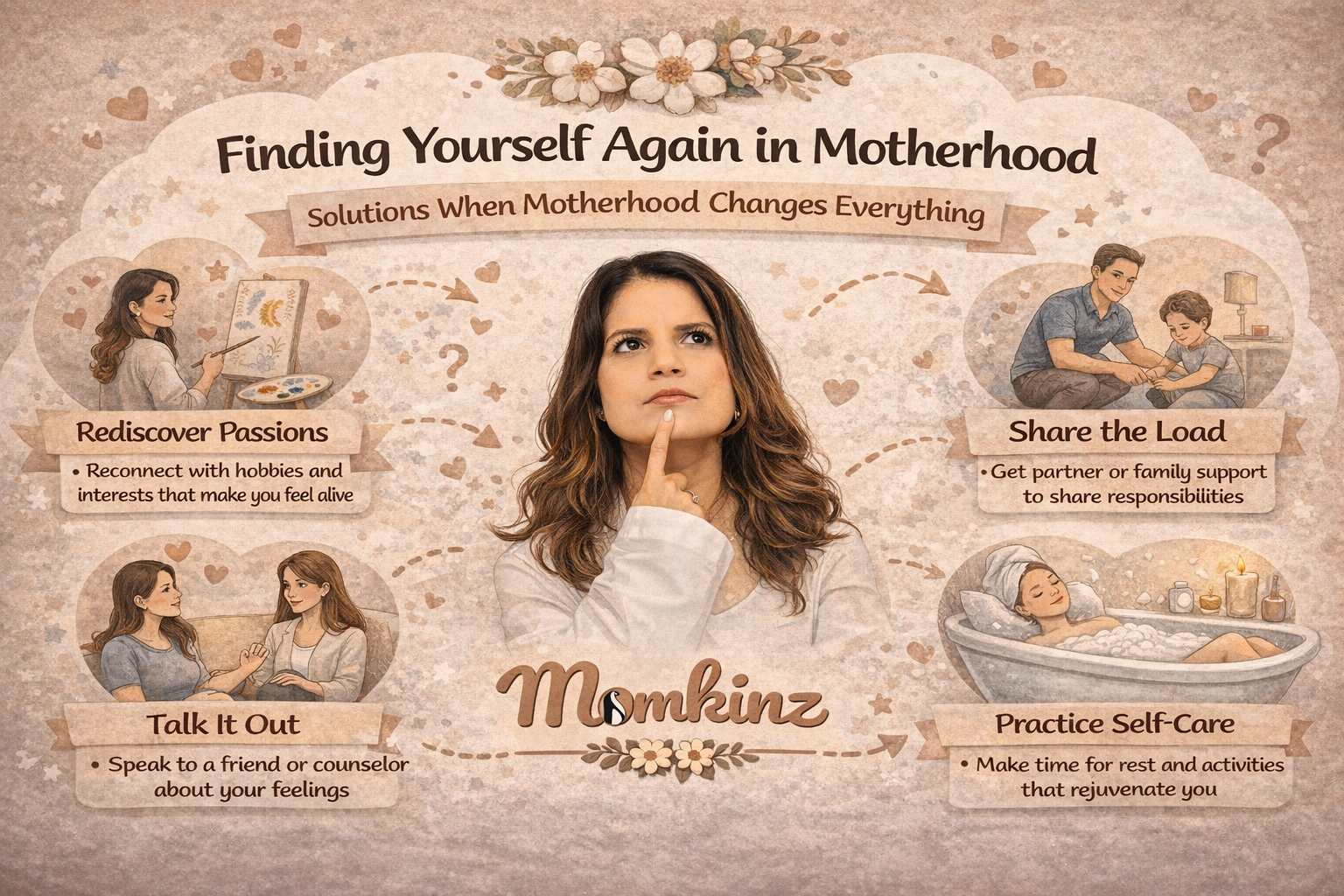
Gentle Ways Moms Are Reclaiming Identity (Without Pressure)
Not big reinventions. Small, human steps.
What’s helping:
- Naming ourselves beyond “mom” in conversation
- Returning to one small interest (reading, walking, journaling)
- Protecting a sliver of personal time, even 10 minutes
- Connecting with other moms who say the quiet parts out loud
Identity doesn’t return all at once. It comes back in pieces.
Real Mom Scenario (If This Feels Familiar)
It’s nap time.
The house is quiet.
Instead of resting, we scroll and feel… empty.
Not bored.
Not tired.
Just unsure who we are without someone needing us. That moment matters.
It’s often where healing starts if we don’t rush past it.
Why Support Matters More Than Answers
Identity loss doesn’t need fixing.
It needs witnessing.
That’s why moms who have:
- Postpartum support groups
- A compassionate postpartum care provider
- Postpartum support professionals
…report feeling more grounded, even before anything “changes.”
Being seen restores a sense of self.
Before We Talk About Next Steps, Let’s Reassure Ourselves
If we’re feeling lost:
- We are not failing motherhood
- We are not behind
- We are not broken
We are in transition.
And transitions are uncomfortable even when they lead somewhere meaningful.
You Don’t Have to Find Yourself Alone
At Momkinz, we exist for this exact season, the one where identity feels shaky, and emotions feel layered.
We help moms connect with:
- Postpartum support groups near them
- Postpartum care providers who understand mental health
- Postpartum support professionals who see the whole woman
When we’re ready, we can visit Momkinz.
No pressure. Just support.
If this post made us feel seen, that matters.
We don’t need to rush into a “new normal.”
We don’t need to pretend we didn’t lose something.
We are allowed to grieve who we were
while growing into who we’re becoming.
And we don’t have to do that alone.
FAQs
1. Is identity loss after motherhood normal?
Yes. It’s a common response to a major life transition.
2. Can identity loss cause postpartum depression?
Unaddressed identity grief can contribute to mood symptoms.
3. Why do we feel guilty for missing our old life?
Because society expects gratitude without complexity.
4. Does this feeling last forever?
No. Identity continues to evolve over time.
5. Should we “bounce back” to who we were?
There’s no need. Integration is healthier than reversal.
6. Can therapy help with identity shifts postpartum?
Yes — especially with postpartum-informed providers.
7. Is it okay to want time away from being “mom”?
Absolutely. That doesn’t diminish love.
8. How can we start feeling like ourselves again?
By honoring small parts of who we are consistently.
9. Does talking to other moms really help?
Yes. Shared language reduces isolation.
10. Where can we find support for postpartum identity changes?
Through Momkinz postpartum support.